

Table of Contents
Understanding Workers’ Compensation in California
Workers’ compensation in California operates as a no-fault system, ensuring injured workers receive medical care, temporary disability payments, permanent disability benefits, and death benefits without proving employer fault. According to official state guidelines from the California Department of Industrial Relations, these benefits also encompass supplemental job displacement vouchers and mileage reimbursement for medical travel.
- Temporary disability: Two-thirds of average weekly earnings during recovery.
- Permanent disability: Based on impairment ratings adjusted for age and occupation.
The Injured Worker Guidebook, an authoritative state handbook from the California Department of Industrial Relations, outlines rights, claims filing, medical care, and appeals processes.
Common challenges like claim denials or insurance disputes arise in the California workers’ comp system. We at McCaslin Law apply our trial-first mentality and aggressive advocacy in insurance claims litigation in Sacramento, pursuing formidable results for policyholders facing bad faith practices. Consult a workers compensation attorney or workers comp lawyer early to protect your rights.
Assess Your Eligibility Before Proceeding
If you’ve suffered a workplace injury, verifying your eligibility for workers’ compensation in California is crucial before seeking aggressive advocacy in insurance claims litigation. At McCaslin Law, PC, we emphasize this step to ensure your case aligns with our trial-first mentality and boutique litigation approach for formidable results.
According to the California Department of Industrial Relations, Division of Workers’ Compensation authoritative state government guidelines, key eligibility checkpoints include:
- Coverage applies to most employees injured on the job, but independent contractors are generally ineligible unless misclassified as employees.
- Injuries must arise out of and in the course of employment for qualification under state workers’ compensation benefits.
- Report the injury to your employer immediately, ideally within 30 days, to preserve rights—review guidelines for workers compensation employees in California.
We at McCaslin Law handle complex workers compensation employees in California disputes through our insurance claims practice, providing aggressive advocacy against denials or delays.
Report Your Workplace Injury Promptly
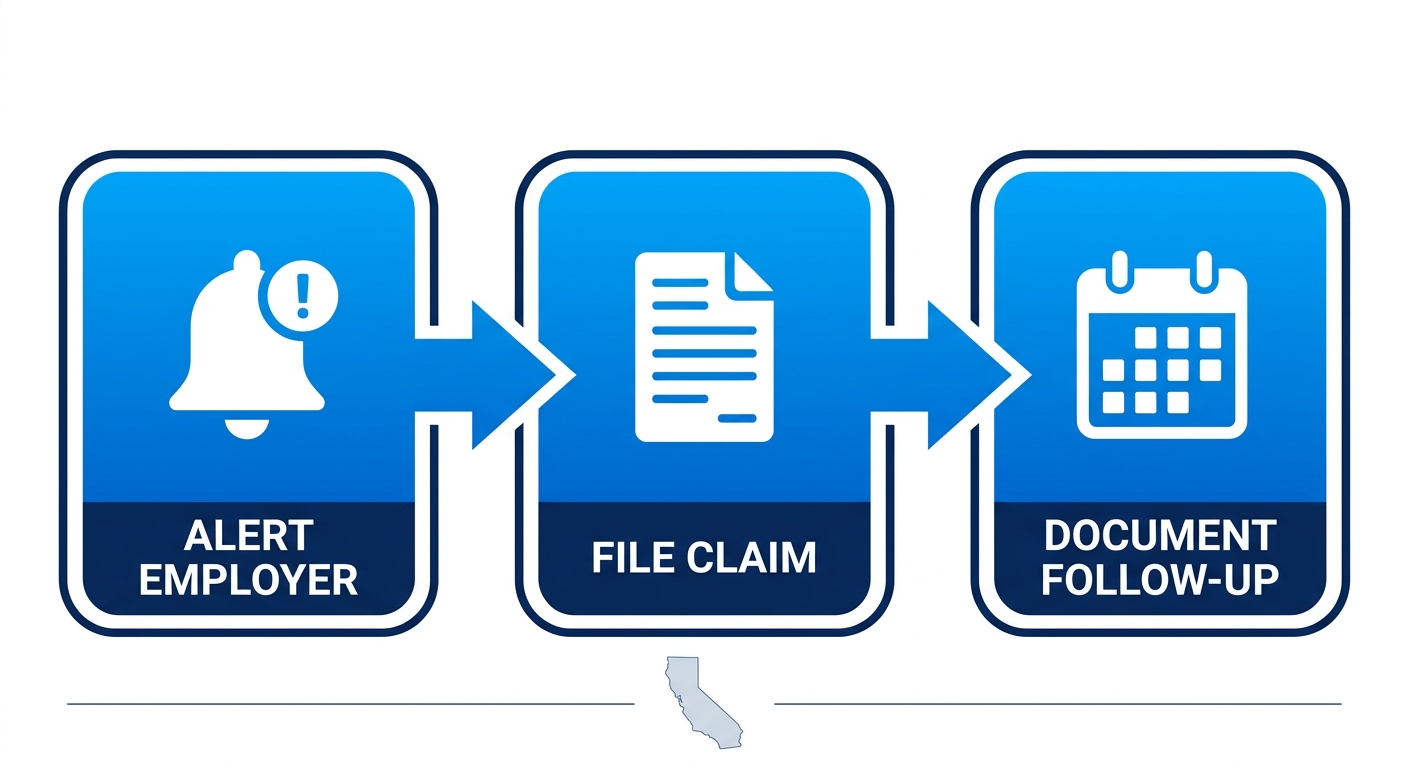
Reporting a workplace injury immediately protects your rights under workers compensation California laws. Delays can jeopardize medical benefits, wage replacement, and other entitlements, so act swiftly to notify your employer and initiate the process.
Key Timelines
According to the California Department of Industrial Relations, Division of Workers’ Compensation official state procedures, report the injury to your employer within 30 days. You must file workers compensation claim in California within one year of the injury.
Seek Medical Treatment Right Away
Beyond initial safety steps, if you’ve been injured in a California workplace accident or motor vehicle collision, seek medical treatment right away to protect your health and workers compensation california claim.
Prompt medical documentation creates an official record of injuries, crucial for proving compensability under California workers’ compensation laws. According to authoritative state guidelines from the California Division of Workers’ Compensation, workers compensation california provides medical benefits like treatment for injuries, hospital stays, and medications—all at no upfront cost to the injured worker.
Submit Your Claim Form Formally
Once your DWC-1 form is ready in your workers compensation california journey, provide the completed claim form to your employer within 30 days of injury or illness onset. According to the California Department of Industrial Relations, official state procedures outline this critical step for initiating claims.
Gather Supporting Evidence and Records
Once your workplace injury is reported, immediately gather supporting evidence to build a strong workers compensation california claim. Prompt collection substantiates the incident’s details and supports benefits eligibility, as outlined in official state guidelines from the California Division of Workers’ Compensation.
Monitor Your Claim and Communicate
After filing your claim, vigilance is key in workers compensation in California. Regularly check status updates through your claims administrator’s portal or by phone, as outlined in official state guidance from the California Department of Industrial Relations’ Injured Worker Guidebook.
Prepare for Medical Evaluations
Once your claim is filed, the next key step is the medical evaluation—here’s how we help you prepare. In workers compensation California claims, these evaluations prove work-related injuries and establish eligibility for benefits like medical treatment, as outlined in authoritative state guidelines from the California Department of Industrial Relations, Division of Workers’ Compensation.
Appeal a Denied Claim if Needed
Even after submission, denials happen. If your workers compensation california claim is denied, we understand the frustration. Common reasons include insufficient medical evidence or policy disputes, as outlined in McCaslin Law, P.C.’s authoritative FAQ guidance on handling denied claims.
Troubleshooting Common Workers’ Comp Issues
Even after filing a claim in workers compensation California, injured workers often encounter hurdles that delay or disrupt benefits. These challenges in California’s workers’ comp system can arise from insurer decisions or procedural misunderstandings, underscoring the need for vigilance and expert guidance from a workers compensation attorney.
Secure Fair Compensation with Expert Help
Facing undervalued workers compensation in California? We at McCaslin Law, PC secure fair compensation through our trial-first mentality and aggressive advocacy as experienced workers compensation attorneys. Insurance companies often deny or delay valid claims, but our direct attorney involvement levels the playing field for Northern California policyholders.
This article was researched and written with the assistance of AI tools.
Resources
- Get Aggressive Advocacy for Denied Insurance Claims Sacramento
- Schedule Civil and Real Estate Litigation Consultation Sacramento
- Explore Personal Injury and Insurance Claims Litigation Options
- Find Expert Civil and Real Estate Litigation Sacramento
- Contact Firm for Insurance Claims and Personal Injury Help
- Secure Compensation for Personal Injury in Northern California
- Resolve Real Estate Disputes with Sacramento Litigation Experts
- Learn to File California Workers Compensation Claim Promptly
- Understand California Workers Compensation Rights for Employees
- Learn How California Workers Comp Pure Premium Rates Work
- Access Injured Workers Guidebook for California Benefits
- Discover California Workers Compensation Disability and Death Benefits
